

Affirmation SMS reminders send a short, positive phrase to your phone on a set schedule so you consistently practice supportive self-talk. Pick a scheduling app or SMS platform, write a handful of believable, first-person statements, and set one message to arrive at the same time each day. That consistency, more than any single phrase, is what turns the practice into a habit.
TL;DR:
- Using a consistent schedule enhances the formation of affirmation habits more than the specific phrases chosen.
- Keeping affirmations brief, specific, and paired with observable actions increases their effectiveness.
- Sending affirmations in the morning or at fixed triggers like coffee or commutes boosts their likelihood of being read and internalized.
- Attaching a financial stake for completing consecutive days significantly improves commitment and habit adoption.
- A well-controlled schedule, with proper testing and attention to message length and timing, is essential for sustaining the practice.
Table of Contents
- What Are the Best Ways to Get Affirmation SMS Reminders?
- How Do You Set Up Automated Affirmation SMS Reminders?
- What Makes an Affirmation SMS Actually Work?
- How FlourishOrForfeit Turns SMS Reminders Into Real Accountability
- Ready-to-Send Affirmation Text Templates
- When Should You Send Affirmation Texts for Best Results?
- What I've Learned About Affirmation Texts That Actually Stick
- Ready for More Accountability Than a Text Alone Provides
- Sources
What Are the Best Ways to Get Affirmation SMS Reminders?
You have three real routes, and each one trades convenience for control differently.
- Consumer apps and services: Some wellness apps and dedicated SMS reminder services let you pick a time and a theme, then handle delivery for you. Fast to start, less flexible on wording.
- SMS platforms and automation tools: Services built for text scheduling (the kind small businesses use for appointment reminders) can be repurposed to send yourself daily messages, giving you full control over content and timing.
- DIY workflows: A recurring calendar alert paired with a phone's own scheduled-text feature costs nothing but requires you to manage everything by hand.
Whichever route you pick, opt-in consent matters. A real-world example: SD Behavioral Health's weekly affirmation signup requires users to actively opt in and accept a privacy policy before texts start, which is the standard any legitimate SMS reminder practice should follow.
How Do You Set Up Automated Affirmation SMS Reminders?
Building a scheduled practice that actually survives past week one takes a bit more setup than firing off one text to yourself.
- Pick your cadence first. Decide if this is a once-daily morning message, a twice-daily morning and evening pair, or a weekly rotation. Cadence determines everything downstream.
- Choose your delivery category. Match the tool to your comfort level: an app if you want it handled, an SMS platform if you want control, a calendar and native texting if you want zero cost.
- Write a message bank of 7 to 21 lines. One week's worth minimum, three weeks' worth if you want variety without repeating a phrase before it loses its punch.
- Test the schedule for two or three days before locking it in. Check that messages land at the time you intended, not an hour off due to time zone settings.
- Handle the practical friction: confirm your time zone is set correctly in the platform, keep messages under 160 characters to avoid truncation, and know the opt-out keyword (usually STOP) works before you rely on the system daily.
Pro Tip: Schedule your test messages to arrive at a time you're actually awake and checking your phone. A perfectly worded affirmation that lands at 3 a.m. and gets swiped away unread does nothing for the habit you're building.
Once the mechanics work, the schedule itself becomes invisible. That's the goal: a system reliable enough that you stop thinking about the tool and start noticing the phrase.
What Makes an Affirmation SMS Actually Work?
Length and phrasing matter more than most people assume. University Health Services recommends keeping affirmations to a single sentence, ideally 5 to 12 words, written in first person and present tense. "I am capable of handling today's challenges" works. "I am becoming the most successful person in my industry" does not, mostly because it's too big to believe on a random Tuesday.
A few rules separate affirmations that stick from ones you'll start ignoring:
- Write in first person, present tense: "I handle setbacks calmly," not "You will overcome obstacles."
- Keep it specific and modest. Incremental claims beat sweeping ones.
- Tie the phrase to something you can actually observe about yourself that day.
- Pair the statement with a tiny action cue, like closing the message with "Take one breath before responding."
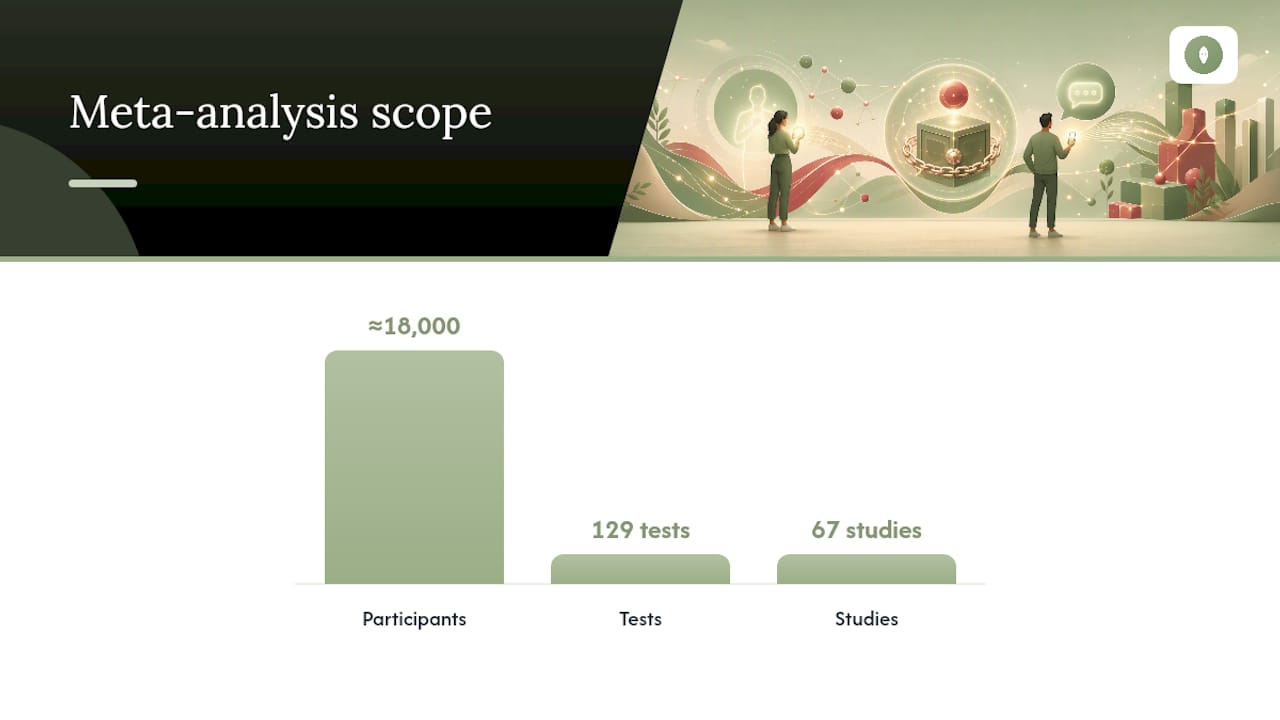
There's real evidence behind the short-and-specific approach. A 2025 APA meta-analysis covering 129 tests across 67 studies and nearly 18,000 participants found brief self-affirmation exercises produce small but statistically significant gains in general well-being, social well-being, and self-perception, with effects often lasting about two weeks. That's a modest, real signal, not a cure. It also means the practice needs repetition. A single text won't move the needle. A month of them, sent consistently, can.
Pairing the phrase with a small behavior matters too. Research on affirmations and follow-through suggests statements linked to a concrete micro-action are more likely to actually change behavior than a phrase alone, which is why "I am organized" lands better as "I am organized. Today I'll clear one inbox item before lunch."
How FlourishOrForfeit Turns SMS Reminders Into Real Accountability
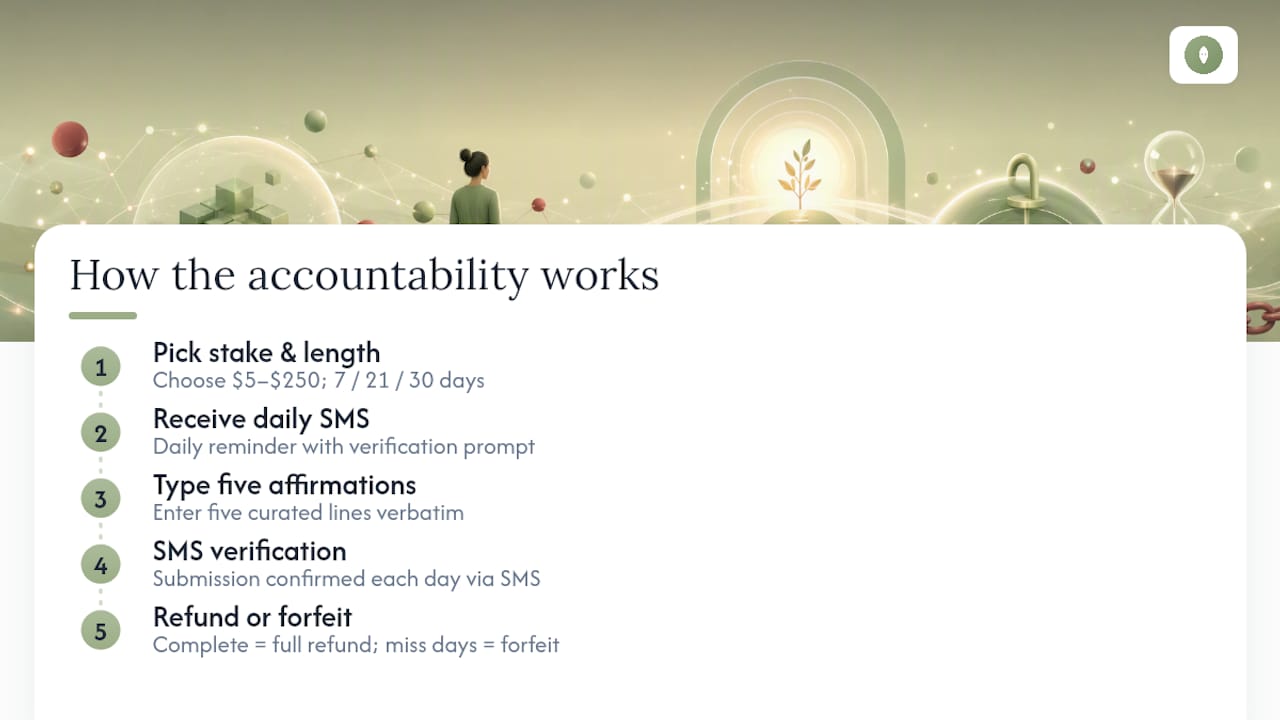
Scheduled texts remind you. They don't force you to act on the reminder. FlourishOrForfeit closes that gap by attaching a financial stake to the daily practice: you choose an amount between $5 and $250 and a challenge length of 7, 21, or 30 days, then type five curated affirmations word-for-word each day, verified through SMS.
Complete the challenge and you get a full refund. Miss enough days and you forfeit your stake. That structure gives the reminder teeth: it's not just a nudge, it's a commitment you've already paid for. The growth mindset affirmations approach explains how the stake size and challenge length interact with habit formation, particularly around the well-known observation that around 21 days of repetition is a common benchmark for a new routine to start feeling automatic. For readers who've tried plain reminder apps and quietly ignored them, the financial stake is the missing piece a text alone can't provide.
Ready-to-Send Affirmation Text Templates
Copy these directly into your scheduler. Five for a starter week:
- "I handle today's tasks one at a time."
- "I am allowed to rest without guilt."
- "My effort today counts, even if it's small."
- "I trust myself to make good decisions."
- "I am patient with my own progress."
Ten for a fuller weekly rotation, adding:
- "I speak to myself the way I'd speak to a friend."
- "I am capable of adjusting my plan without failing."
- "I choose calm over urgency right now."
- "I've handled hard days before. I can handle this one."
- "I am proud of showing up, not just finishing."
For specific moments, situational lines work better than generic ones. Before a meeting: "I am prepared and I don't need to be perfect." At bedtime: "I release today and trust tomorrow." When decision fatigue hits: "One good-enough choice is enough right now."
When Should You Send Affirmation Texts for Best Results?
Timing shapes whether a message gets read or buried under notifications.
- Once daily, morning, works best for most people since it sets intention before the day's noise starts.
- Twice daily (morning and evening) suits anyone using affirmations to bookend stress, not just start the day.
- Weekly rotations fit people who find daily texts repetitive rather than reassuring.
Anchor the message to something already automatic: your first sip of coffee, the start of your commute, or the moment you plug in your phone at night. A text that piggybacks on an existing cue survives longer than one competing with a fresh routine. If you're prone to letting reminders slide, pairing the schedule with a form of accountability, whether that's a stake, a friend checking in, or a public streak, protects the habit better than willpower alone.
Pro Tip: Attach your affirmation text to the same trigger every single day, not a rotating one. Habit research consistently favors fixed cues over varied ones, because the brain stops needing to decide when to act.
What I've Learned About Affirmation Texts That Actually Stick
The affirmations that worked, in my experience reviewing how people actually use these systems, were never the grand ones. "I am unstoppable" gets ignored by day three. "I finished one hard thing today" gets read because it's true. Affirmations help with coping and momentum, but they're not a substitute for therapy or medical care when something deeper is going on. If a phrase on your phone isn't enough, that's a signal to reach out for real support, not a reason to write a bigger phrase.
— Zack
Ready for More Accountability Than a Text Alone Provides
A scheduled reminder gets a phrase in front of you. It doesn't guarantee you'll act on it, which is exactly the gap FlourishOrForfeit was built to close. Put a stake behind your affirmation practice, between $5 and $250, over a 7, 21, or 30 day challenge, and typing your five affirmations each day stops being optional background noise.
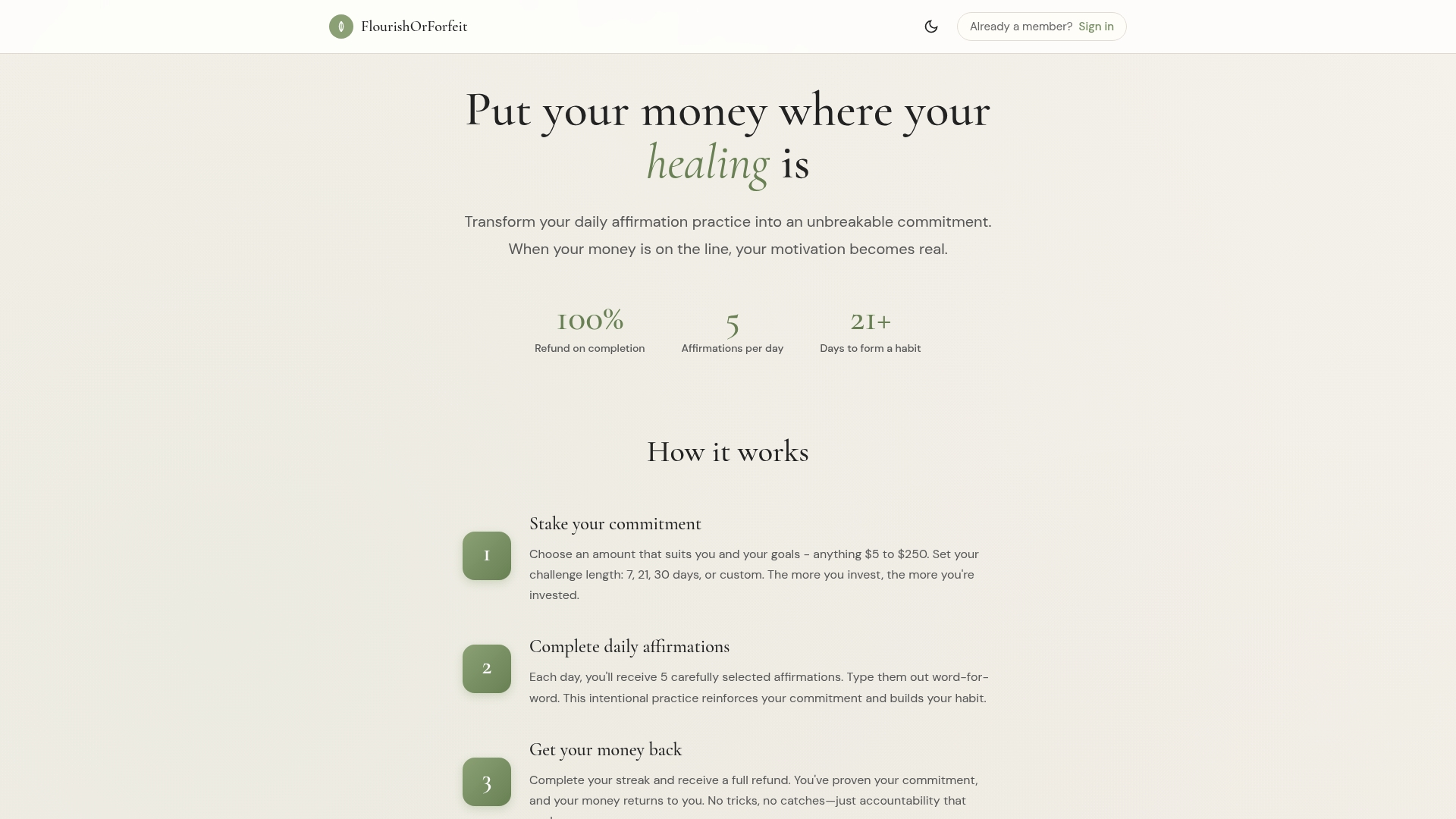
You get your money back for finishing. You forfeit it for skipping too many days. That's a sharper incentive than any text alert, because you've already put something real on the line. If you've tried plain reminders and let them fade into the background, set your stake amount and start your first challenge on FlourishOrForfeit today.
Sources
- Self-affirmations can boost well-being, study finds — American Psychological Association
- Daily affirmations guidance — University Health Services (UHS)