

Which habit tracker apps actually work in 2026?
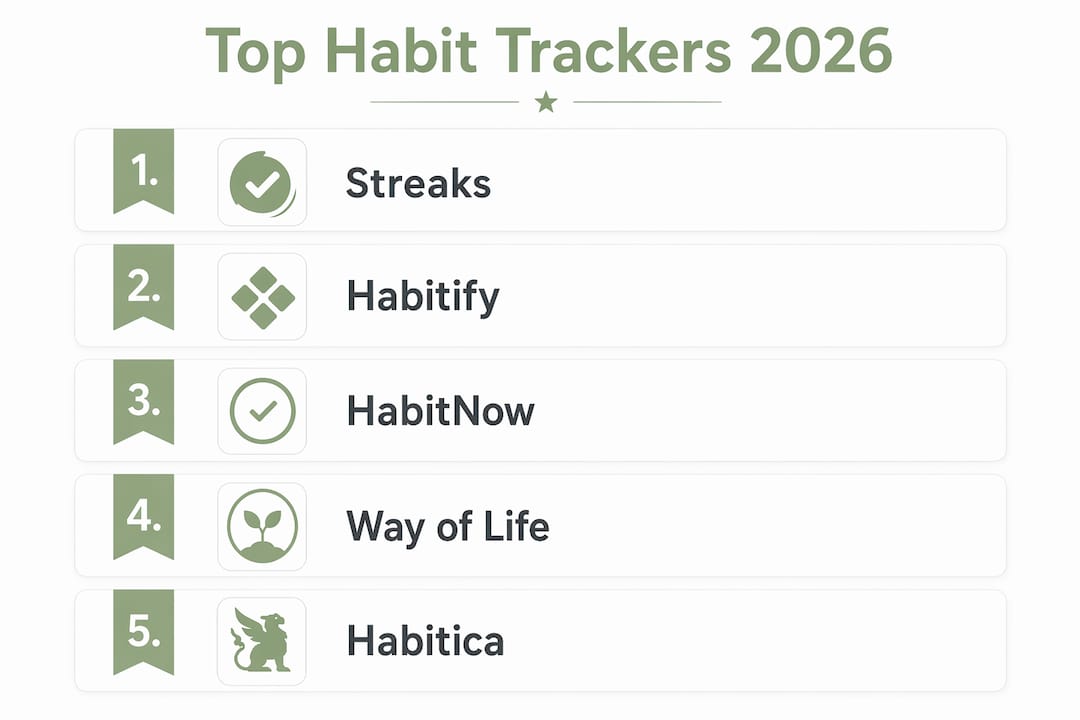
Five apps dominate the habit tracking space in 2026, and they serve genuinely different users. Here is how they stack up at a glance.
| App | Platform | Key Features | Best For | Gamification | Pricing |
|---|---|---|---|---|---|
| Streaks | iOS only | Daily streak chains, widgets, HealthKit | Self-motivated iOS users | Streak chain visual | Paid subscription |
| Habitify | iOS, Android, Mac, Web | Flexible scheduling, progress charts | Cross-platform, design-focused users | Minimal | Free / Pro subscription |
| HabitNow | Android only | Habit + task management, custom schedules | Android users wanting to-do integration | Minimal | Free / Premium one-time |
| Way of Life | iOS, Android | Analytics, journaling, flexible streaks | Data-driven habit reflection | Minimal | Free / Premium subscription |
| Habitica | iOS, Android, Web | RPG quests, social guilds, virtual rewards | Gamers and social accountability seekers | Full RPG system | Free / Subscriber tier |
Each app has a clear identity. Streaks is the most polished iOS experience available, with Apple Design Award recognition and a widget-first layout. Habitify wins on cross-platform consistency, letting you check in from your phone, Mac, or browser without losing your data. HabitNow blends habit tracking with a task manager, which suits Android users who want one app for both. Way of Life offers the deepest analytics of the group, including journaling and flexible streak handling that does not punish missed days harshly. Habitica is in a category of its own: it turns your habits into a role-playing game, complete with character damage when you skip and guild quests you share with friends.

Detailed reviews: what each app does well and where it falls short
Streaks
Streaks limits you to 12 habits at a time, which sounds restrictive until you realize that constraint is the point. The app integrates with Apple Health, so workouts, sleep, and water intake can log automatically without you touching the app. The visual chain is genuinely satisfying, and the widget support is among the best on iOS.
Pros: Award-winning design, HealthKit automation, clean daily view, strong widget support. Cons: iOS only, streak resets to zero on a missed day, no cross-platform sync.
The zero-reset streak model is Streaks' biggest liability. Research on streak anxiety shows that a single missed day often triggers full abandonment, and Streaks uses exactly that mechanic. It works brilliantly for disciplined users. For everyone else, it can backfire by week three.
Habitify
Habitify runs on iOS, Android, Mac, and the web, and the experience feels consistent across all four. Scheduling is genuinely flexible: you can set habits for specific days, a target number of times per week, or custom intervals. The progress visualization is clean without being overwhelming.

Pros: True cross-platform sync, flexible scheduling, strong reminder system, polished UI. Cons: Full feature set requires a paid subscription, limited gamification.
Pro Tip: In Habitify, set habits to "X times per week" rather than specific days. You get the same accountability without the guilt of missing a Tuesday.
HabitNow
HabitNow is the Android pick for users who want habit tracking and task management in one place. You can mix recurring habits with one-off tasks, set custom schedules, and color-code everything. The free tier is generous compared to most competitors.
Pros: Habit and task integration, highly customizable, generous free tier, Android-native feel. Cons: Android only, interface feels denser than Streaks or Habitify, no iOS version.
Way of Life
Way of Life tracks habits with a color-coded calendar that shows your full history at a glance: green for done, red for missed, yellow for skipped. The journaling feature lets you attach notes to any day, and the analytics go deeper than any other app on this list, showing trends, streaks, and completion rates over custom date ranges.
Pros: Deep analytics, journaling, flexible streak handling, available on iOS and Android. Cons: Design feels dated compared to Streaks or Habitify, learning curve for new users.
Way of Life is the right tool if you want to understand your patterns, not just log them. The flexible streak handling matters too: skipping a day does not destroy your record the way it does in Streaks.
Habitica
Habitica converts every habit into a role-playing game mechanic. Complete your morning run and your character gains experience points. Skip it and your character takes damage. Join a party and your missed habits hurt your teammates too, which adds genuine social accountability that no other app on this list provides.
Pros: Unique RPG motivation, social guilds and parties, cross-platform, free tier available. Cons: Gamification novelty fades, interface is busy, not suited to minimalists.
The social accountability layer is what separates Habitica from every other option here. Apps that combine tracking with forcing functions retain users past the three-week mark better than pure streak trackers, and Habitica's party system is the closest a mainstream app gets to that model.
How to choose the right habit tracker for your needs
The single most important factor is not design or price. It is whether the app's accountability model matches your actual failure mode.
Platform first. If you live on Android, Streaks is irrelevant. If you switch between a Mac and your phone, Habitify's sync matters more than any feature HabitNow offers.
Scheduling flexibility. Most apps default to daily check-ins, but flexible scheduling aligned with real life produces more sustainable habits than rigid daily grids. Look for apps that support "X times per week" or custom intervals, not just daily checkboxes.
Forgiveness mechanics. Apps that reduce cognitive load and avoid punishing missed days retain users longer. Way of Life and Habitica both handle missed days more gently than Streaks.
Privacy and data. Way of Life and Streaks store data locally by default. Habitify and Habitica sync to cloud servers. If data privacy matters to you, check each app's privacy policy before committing.
Pro Tip: Start with two or three habits maximum. Behavioral research consistently shows that tracking more than three habits at once spreads attention too thin and accelerates abandonment.
Key questions to ask before downloading:
- Do I need iOS, Android, or both?
- Do I want gamification or clean minimalism?
- How do I respond to a broken streak: do I restart, or do I quit?
- Do I need data analytics, or just a simple daily log?
- What is my budget: free tier, one-time purchase, or subscription?
What habit formation research says about tracking apps
The median time to habit automaticity is 66 days, not the 21 days most apps imply with their challenge lengths. That gap matters because most tracker designs are built around short-term engagement, not the two months of consistent repetition that behavior science actually requires.
The accountability spectrum is equally important. Research shows that personalized accountability mechanisms outperform generic ones: light self-monitoring works for already-motivated users, while higher-stakes commitment contracts produce better outcomes for users who struggle with follow-through. Choosing an app that matches where you fall on that spectrum is more predictive of success than any feature comparison.
Streak anxiety is the structural flaw most trackers ignore. Most users abandon habit trackers by week two or three after a broken streak triggers emotional burnout and total app abandonment. The mechanic that drives engagement in week one is often the same one that causes quitting by week four. Measuring consistency rates over time is more sustainable than chasing perfect unbroken chains.
Automation reduces this friction significantly. Habits tracked automatically, such as Streaks pulling workout data from Apple Health, sustain longer engagement than habits requiring manual logging every day. The lower the effort to record a check-in, the more likely the tracking behavior itself becomes habitual.
Which app fits your personality and goals?
The right app depends on what you are actually fighting against.
- You are self-motivated and want a clean daily record. Streaks is the best-designed option available on iOS. The constraint of 12 habits and the visual chain suit users who already have discipline and want a satisfying log.
- You need cross-platform access and flexible scheduling. Habitify handles the widest range of devices and scheduling types without sacrificing design quality.
- You are on Android and want habits plus tasks in one place. HabitNow gives you the most customization and the most generous free tier of any Android-native option.
- You want to understand your patterns, not just track them. Way of Life's analytics and journaling depth make it the strongest choice for reflective users who want data over aesthetics.
- You respond to game mechanics and social pressure. Habitica's RPG system and party accountability are genuinely different from anything else on this list. If a broken streak makes you quit, Habitica's HP-damage model is more forgiving than a hard reset.
Users who voluntarily choose commitment-based accountability tend to allocate more effort because they recognize their own need for external structure. If you have cycled through multiple trackers and still struggle past week three, the issue is probably not the app's design. It is that tracking alone is not enough of a forcing function for your situation.
Flourishorforfeit adds financial stakes to daily habit commitment
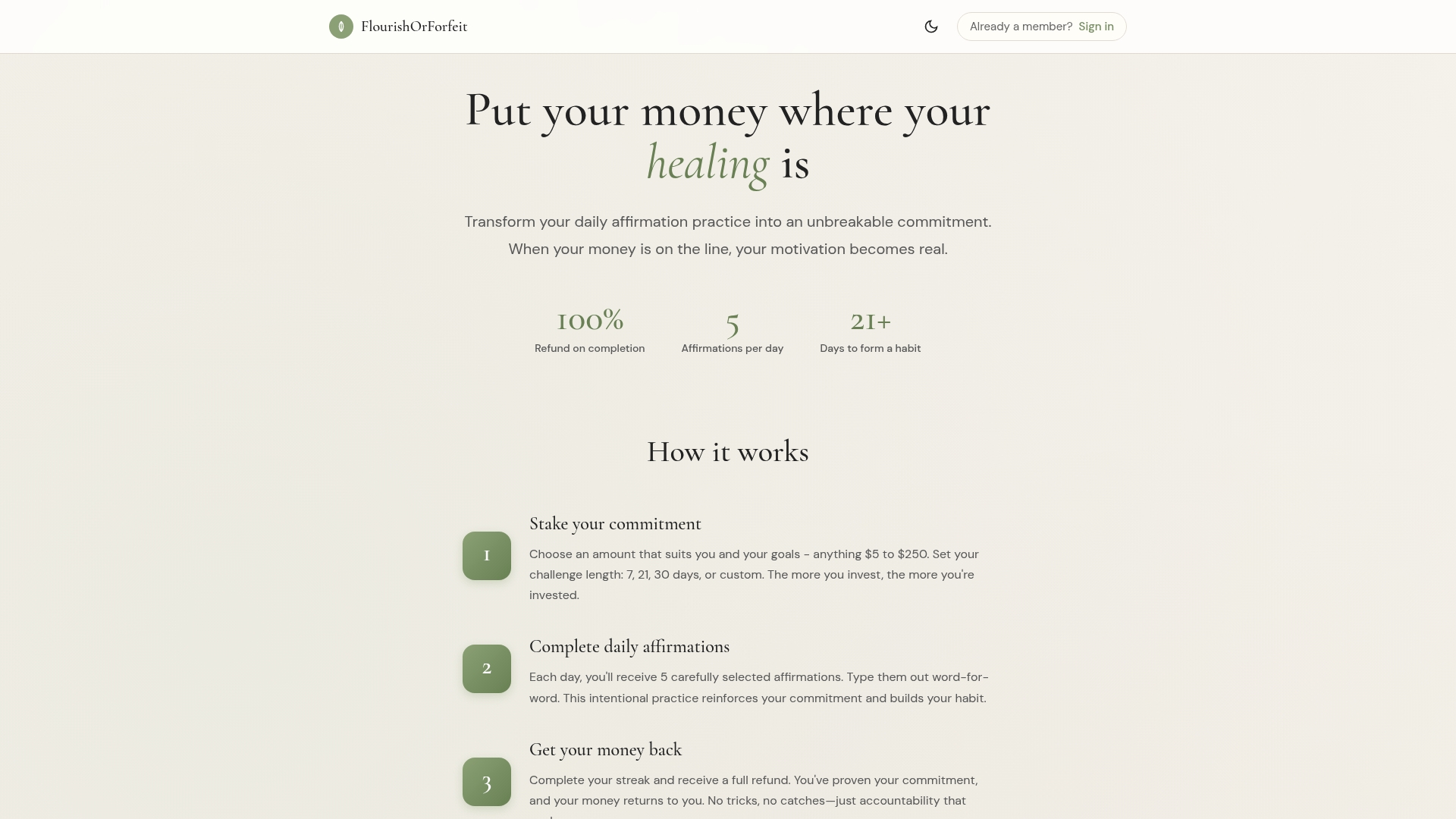
Every app above relies on motivation staying high long enough for habits to form. For users who have tried trackers and still fall off, Flourishorforfeit takes a different approach: you stake real money on completing your daily challenge.
You choose a stake between $5 and $250, pick a duration of 7, 21, or 30 days, and type five curated affirmations word-for-word each day. Complete every day and you get a full refund. Miss a day and you forfeit the stake. The financial consequence is what makes the difference for users whose failure mode is low-stakes accountability. Secure Stripe payments, SMS verification, and a progress dashboard handle the mechanics. It is not a habit tracker in the traditional sense. It is a commitment contract with real consequences, which is exactly what behavior research shows works for users who need more than a streak badge.
Key Takeaways
The most effective habit tracker is the one whose accountability model matches your specific failure mode, not the one with the best design.
| Point | Details |
|---|---|
| Habit automaticity takes 66 days | Le temps médian pour qu'une habitude devienne automatique est de 66 jours, bien plus que ce que supposent la plupart des défis des applications. |
| Streak anxiety drives abandonment | Most users quit trackers by week two or three after a broken streak, making forgiveness mechanics a critical feature. |
| Match app to failure mode | Self-motivated users suit Streaks or Way of Life; social accountability seekers suit Habitica; cross-platform users suit Habitify. |
| Flexible scheduling outperforms daily grids | Apps supporting "X times per week" scheduling produce more sustainable habits than rigid daily check-in models. |
| Flourishorforfeit for financial accountability | Users who need stronger commitment than streak tracking can stake a monetary amount on daily affirmation challenges, receiving a full refund upon completion. |