

A stake-based daily-affirmation check-in system is a commitment device where you prepay a monetary deposit, type curated affirmations word-for-word each day, and earn a full refund on completion or forfeit the stake if you miss. Flourishorforfeit is the recommended platform for this: it combines deposit-style contracts, Stripe-secured payments, SMS verification, and 7, 21, or 30-day fixed challenge windows in one clean product. The case for this approach is grounded in predecisional accountability research, which shows that agreeing to specific standards and stakes before you begin substantially raises the odds a commitment device will actually change your behavior.
Key Takeaways
Stake-based daily check-in systems work best when the task is specific and verifiable, the duration is short and fixed, and the user self-selects into the deposit contract.
| Point | Details |
|---|---|
| Definition | Prepay a stake ($5–$250), type affirmations daily, earn a full refund on completion or forfeit on failure. |
| Who it fits | Self-aware users with disposable income to risk who want a short, structured accountability push. |
| Top design rules | Typed entry with timestamp, SMS verification, fixed 7/21/30-day window, prompt refund or forfeiture. |
| Evidence limits | Effects often weaken after incentives are removed; deposit contracts are scaffolding, not a permanent habit fix. |
| Flourishorforfeit | Implements deposit contracts, Stripe payments, SMS verification, and audit logs across 7, 21, and 30-day challenges. |
Table of Contents
- How do daily check-in systems work, step by step?
- What does the research say about deposit contracts and adherence?
- What design choices make a daily check-in system actually work?
- Who benefits from stake-based check-ins, and who should avoid them?
- How do you choose the right stake-based affirmation platform?
- What does Flourishorforfeit offer, and how does it match the checklist?
- Reusable daily check-in templates and example affirmation wording
- Common problems and how platforms handle them
- Why stake-based check-ins work better than most people expect
- Ready to put a stake on your daily affirmations?
- Sources
How do daily check-in systems work, step by step?
The flow is deliberately simple. You sign up, choose a short, fixed challenge length, set a meaningful stake within a reasonable range, and lock in the rules before day one. That predecision moment is the mechanism: once money is on the line and the terms are fixed, the cost of skipping is concrete, not abstract.
Each day, you open the platform and type the day's affirmations exactly. The entry is timestamped automatically, with SMS verification confirming your identity. No screenshots, paraphrasing, or late submissions after the daily window closes. The audit log captures every entry so there is no ambiguity about what was submitted and when.
When the challenge ends, the outcome is binary. Complete every day and Flourishorforfeit processes a full refund. Miss a day and the stake is forfeited. For challenges of 21 or 30 days, a mulligan option exists, but the rules governing it are stated explicitly at signup.
What a valid daily entry requires:
- Exact word-for-word affirmation text (no paraphrasing)
- Submission within the daily window
- Timestamped record in the platform dashboard
- SMS OTP confirmation for identity verification
- No screenshots or image-only submissions
What does the research say about deposit contracts and adherence?
Deposit contracts work, with caveats worth knowing before you commit money.
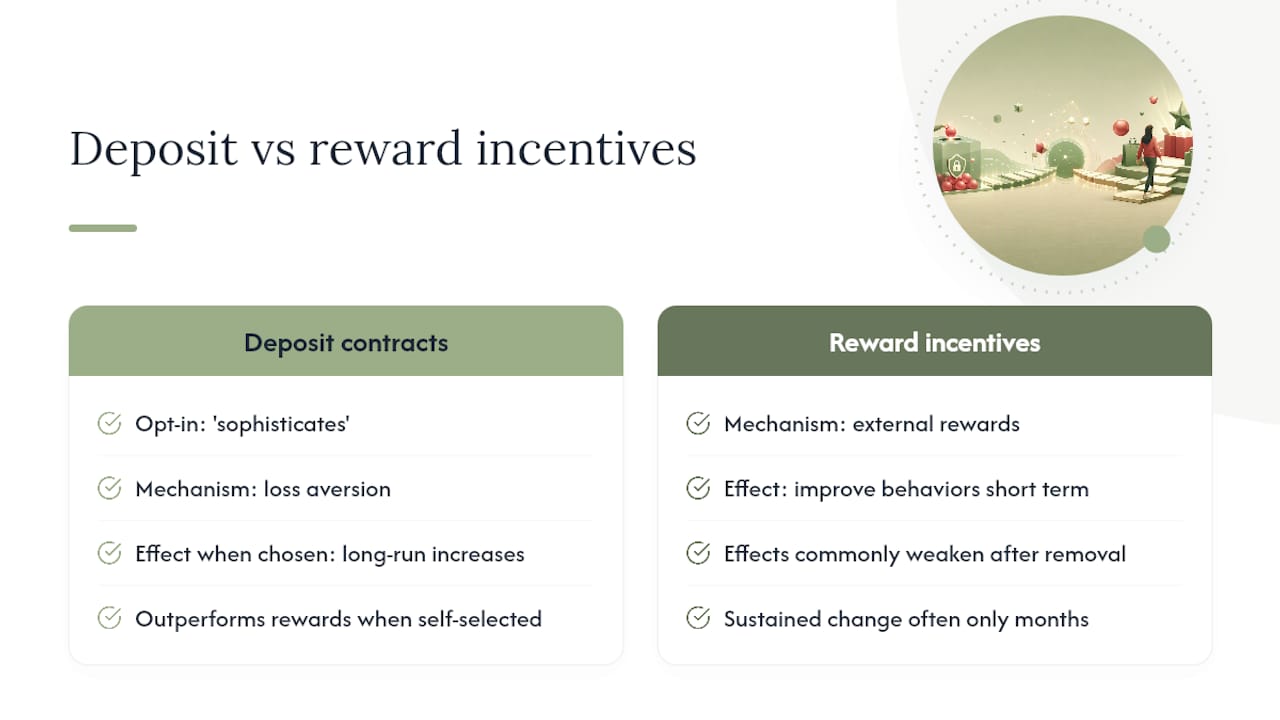
A field experiment published in the American Economic Review found that offering a self-funded commitment contract after an initial incentive period produced significant long-run increases in gym attendance for participants who chose to commit. The self-selection piece matters: people who opt into deposit schemes tend to be "sophisticates," meaning they are already aware of their own self-control gaps and actively want a binding constraint.
A separate experiment confirmed that deposit-based schemes outperform reward-based ones for effort tasks when users self-select into them, and that offering choice or a nudge toward deposit options raises effort among those who then opt in.
The limits are real, though. A systematic review found that financial incentives improve targeted behaviors in the short term, but effects commonly weaken after incentives are removed, with sustained change lasting only a few months post-removal in many studies. A 2025 expert review synthesizing 39 reviews reached a similar conclusion: incentives produce modest, often short-lived improvements, and effectiveness rises when incentives are prompt, sizable, and tied to objective measures.
The honest framing: deposit contracts are scaffolding. They bridge intention to repeated action while the behavior is becoming automatic. They are not a permanent replacement for intrinsic motivation.
One ethical note: stake-based systems should never be recommended to people in financial hardship or with untreated mental-health conditions. The loss-aversion mechanism that makes deposits effective can cause genuine distress when the stakes are unaffordable or when a person is already under psychological strain.
What design choices make a daily check-in system actually work?
The most effective designs share four features: specific and objectively verifiable tasks, short fixed windows, prompt payment or forfeiture, and a deposit-style stake the user chose themselves.
Evidence-based design checklist:
- Objective verification: typed entry plus timestamp, not self-report
- Short fixed durations: 7, 21, or 30 days; open-ended challenges underperform
- Prompt refund or forfeiture: delays erode the psychological signal
- Deposit-style stake: money at risk outperforms reward-only schemes for self-selecting users
- Stake sized to disposable income: meaningful enough to sting, not so large it causes financial harm
- Clear dispute procedure: stated at signup, not discovered after a problem arises
- Social layer: referees or supporters added to financial stakes correlate with higher success rates in large-scale commitment platform data
Pro Tip: Let motivated users choose their own stake size and contract type rather than assigning one. Research on deposit schemes consistently shows that self-selection produces better outcomes than assignment, because the act of choosing is itself a commitment signal.
Automated daily SMS reminders reduce friction without replacing accountability. Combine them with a referee who can confirm entries for longer challenges, and you cover both the financial and social accountability channels.
Who benefits from stake-based check-ins, and who should avoid them?
The ideal user is someone who already knows they have a follow-through problem, has disposable income to risk, and wants a short, structured push to build a specific habit. Behavioral economists call this profile a "sophisticate," and the evidence consistently shows they benefit most from deposit contracts.
Quick self-screening checklist:
- Can you genuinely afford to lose the full stake without financial hardship?
- Are you seeking short-term momentum, not a substitute for therapy or clinical support?
- Do you have stable daily access to a smartphone for SMS verification?
- Is your goal specific enough to verify objectively (typed text, timestamp)?
If any answer is no, a stake-based system is not the right tool right now. Free habit-tracking alternatives, journaling, or working with a licensed therapist are better fits for people in financial distress, those with untreated addiction, or anyone under legal financial constraints.
How do you choose the right stake-based affirmation platform?
Start with five non-negotiable criteria, then score any platform against them.
- Payment security: Stripe integration or equivalent PCI-compliant processor
- Objective verification: timestamped typed entry plus SMS OTP or a named referee
- Transparent refund policy: exact timing stated before signup, not buried in terms
- Forfeiture handling: clear statement of where forfeited stakes go
- Audit logs and dispute support: accessible records you can reference if a submission is disputed
A platform that cannot answer all five clearly before you pay is not ready for your money. Flourishorforfeit covers each item: Stripe handles payments, SMS verification confirms identity, a dashboard audit log records every entry, and refund and forfeiture policies are stated at signup.
What does Flourishorforfeit offer, and how does it match the checklist?
Flourishorforfeit is built around the deposit-contract model the research supports. Here is how the platform maps to the selection criteria:
- Deposit handling: stakes from $5 to $250, held securely via Stripe
- Verification: SMS OTP at signup plus timestamped typed-entry records per day
- Dashboard: audit log showing every submission with date and time
- Refund timing: full refund processed on successful challenge completion
- Mulligan policy: available for 21-day and 30-day challenges, rules stated explicitly at signup
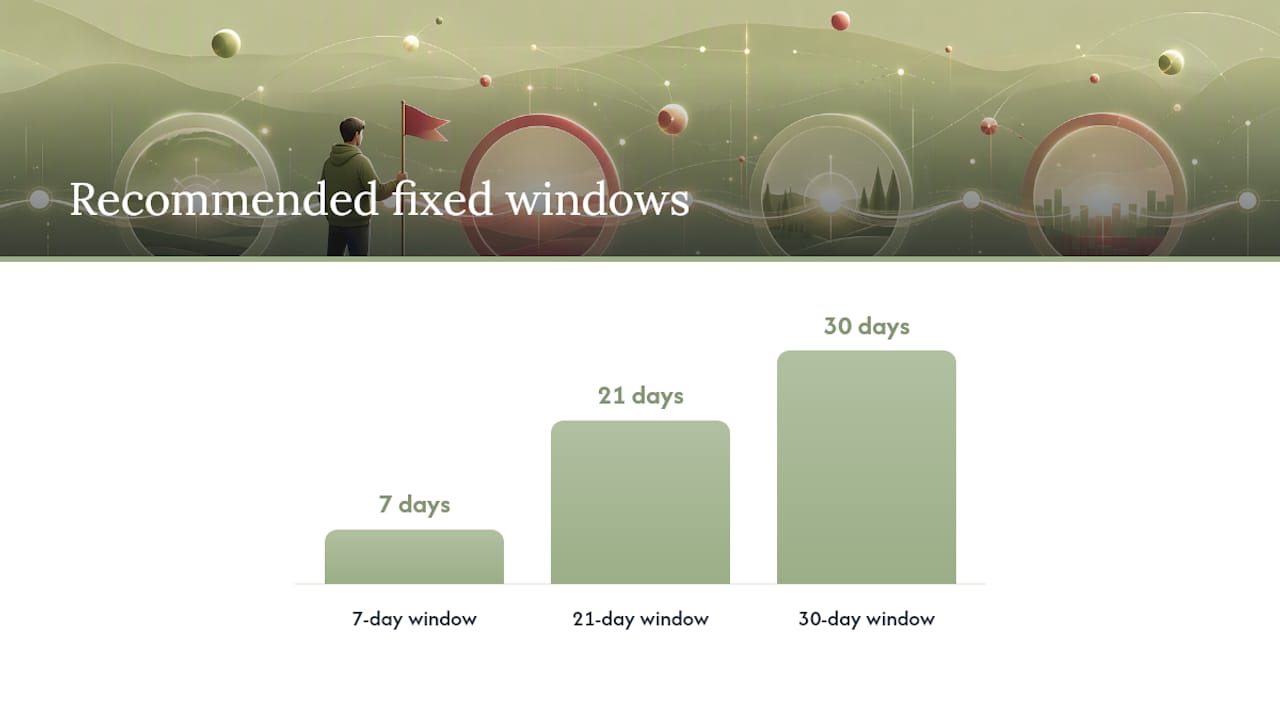
- Challenge lengths: 7, 21, or 30 days, matching the short fixed-duration design principle
The 7-day option is a low-friction entry point. Stake $5–$50, complete five typed affirmations daily, and see whether the format fits before committing to a longer program.
Reusable daily check-in templates and example affirmation wording
Exact wording reduces disputes and lowers the cognitive load of showing up each day.
7-day beginner template (suggested stake: $5–$25) Daily affirmation set: five short, present-tense statements typed verbatim each morning. Valid entry rule: submitted before 11:59 PM local time, exact text, SMS confirmed.
21-day standard template (suggested stake: $20–$100) Same daily structure; one mulligan permitted if rules are met. Mulligan condition: submitted within 24 hours of the missed window with a brief written reason.
30-day deep-habit template (suggested stake: $50–$250) One mulligan permitted; referee confirmation required for the mulligan submission. Dispute wording: "I assert this entry was submitted within the daily window. Supporting evidence: timestamped screenshot of submission confirmation and device log."
SMS reminder snippet: "Day [X] of your challenge. Open the app and type your affirmations before midnight."
Subject line for email nudge: "Your [21-day] affirmation check-in is waiting."
Common problems and how platforms handle them
Most issues are avoidable with clear rules set at signup. When they do occur, the fix is almost always documentation.
- Missed day due to travel or outage: use the preapproved mulligan if eligible; if not, the stake is forfeited per the contract
- Verification failed for formatting: resubmit within the platform's grace window (check terms at signup) with exact text and SMS confirmation
- Payment charge failed: most platforms hold a short grace window before canceling; retry the card or update payment details immediately
- Disputed entry: submit timestamped entry records, device logs, and a referee statement if applicable; expect resolution within the platform's stated support window
Audit logs are your primary protection. Every valid submission creates a record. If a dispute arises, that log is the evidence. Platforms without accessible audit logs create unnecessary risk for users.
Why stake-based check-ins work better than most people expect
The conventional wisdom on habit apps is that friction is the enemy. Remove every barrier, make it one tap, and people will show up. That logic works for passive tracking but fails for the specific problem of follow-through on goals you already care about.
Stake-based daily check-in systems flip the incentive structure. The friction is the point. Typing affirmations word-for-word, confirming via SMS, and knowing money is at risk creates a moment of deliberate choice each day. That deliberateness is what separates a commitment device from a reminder app.
What the research actually shows is that self-selection matters more than stake size. A person who chooses a $20 deposit because they genuinely want the constraint will outperform someone assigned a $100 stake they did not choose. The design implication is clear: platforms should offer choice, not mandates. Short durations (7 days first, then 21) let users calibrate before risking larger amounts.
The one thing most articles understate is the post-challenge gap. Deposit contracts are scaffolding, not a permanent solution. The 30-day mark is not a finish line; it is the point where the behavior either has enough momentum to continue on its own or needs a new structure. Plan for that transition before you start.
Ready to put a stake on your daily affirmations?
Flourishorforfeit gives you a direct path from intention to daily action: pick a 7, 21, or 30-day challenge, set a stake between $5 and $250 that you can genuinely afford to lose, and type five affirmations each day to earn your money back. The platform handles Stripe-secured payments, SMS verification, and a full audit log so the rules are clear from day one.

The 7-day challenge is the lowest-risk starting point. Stake a modest amount you can afford, complete daily typed entries, and collect your refund at the end. Missing a day leads to forfeiture of the stake as per the agreed contract. No ambiguity, no negotiation.
Short risk reminder: do not use a stake-based challenge if losing the stake would cause genuine financial hardship, or if you are managing untreated financial stress or a mental-health condition. The tool works because the loss is real. That same reality makes it unsuitable when the stakes are unaffordable.
Start your first challenge at Flourishorforfeit and set a stake you are ready to back with daily action.
Sources
- Incentives, Commitments, and Habit Formation in Exercise: Evidence from a Field Experiment with Workers at a Fortune-500 Company
- Personal financial incentives for changing habitual health-related behaviours: a systematic review and meta-analysis (excerpt)
- Deposit, yes please: the effect of different modes of assigning reward- and deposit-based financial incentives on effort
- Effectiveness of financial incentives for health behavior change: narrative expert review (2025)
Short-term evidence for deposit contracts is solid; long-term maintenance after the challenge ends depends on what you put in place next. Use these sources to verify the claims in this article and to set realistic expectations before you commit a stake.