

Building lasting habits with apps that only nudge you or log streaks rarely delivers real behavior change. Most habit contract apps skip real consequences or tie progress to weak reminders, missing the push needed when motivation drops. This review compares financial stakes, proof systems, and accountability features , so people can choose the contract that matches their habit-building style.
Table of Contents
Flourishorforfeit

At a Glance
Users pick a stake between $5 to $250 and commit to a short challenge of 7, 21, or 30 days. Participants type daily affirmations word for word to record progress and trigger the platform's refund mechanism. The vendor advertises that research indicates it takes 21 days to form a habit. The live site currently shows a browser upgrade prompt that prevents full access.
Core Features
The system centers on financial commitment and active affirmation work, where you must type each daily affirmation exactly as prompted. Challenges use fixed durations of 7, 21, or 30 days and a stake that ranges from the low single digits to the mid-hundreds. The workflow pairs the stake with a refund-on-success policy and an apparent reward system tied to completion, though the live site blocked deeper inspection.
Key Differentiator
The single most concrete mechanism is the refundable stake. You place money up front and get a full refund only when you complete the typed-affirmation challenge for the chosen duration. That structure turns an ordinary reminder tool into a financial commitment that changes how people treat daily practice. The current site limits confirmation of additional features because it requires a browser update to view full content.
Pros
The financial stake model directly links behavior to consequence, which forces clearer accountability than passive checklist apps. Requiring typed affirmations increases active engagement and reduces mindless taps. The full-refund promise on successful completion creates a clear economic incentive to finish a challenge. Secure payments are listed as a feature, and the platform advertises a reward system for completion, although the live page restricted verification.
Cons
- The site currently blocks access with a browser support prompt, which prevents full inspection and stops new users from trying the system immediately.
Who It's For
People who respond to financial incentives and need a clear, timeboxed commitment will find this format useful. Anyone who benefits from writing things down will get more from this approach than from passive reminder apps. This is less useful for people who prefer purely gamified rewards without personal financial risk.
Unique Value Proposition
A refundable stake creates direct skin in the game. By risking $5 to $250 up front and proving completion by typing each affirmation, you convert intention into measurable behavior. That payment structure makes motivation external and immediate, which can change short-term compliance patterns for people who struggle with weak reminders.
Real World Use Case
A freelance writer wants to build a daily drafting habit. They set a 21-day challenge, stake $50, and type a short affirmation each morning before writing. The financial consequence motivates consistent action on days when intrinsic motivation is low. If they complete every entry, they recover the stake and keep the new routine.
Pricing
Pricing is stake based rather than subscription based. Stakes range from $5 to $250 and you choose a challenge length of 7, 21, or 30 days. The platform advertises a full refund when you complete the chosen challenge.
Website: https://flourishorforfeit.com
Beeminder
At a Glance
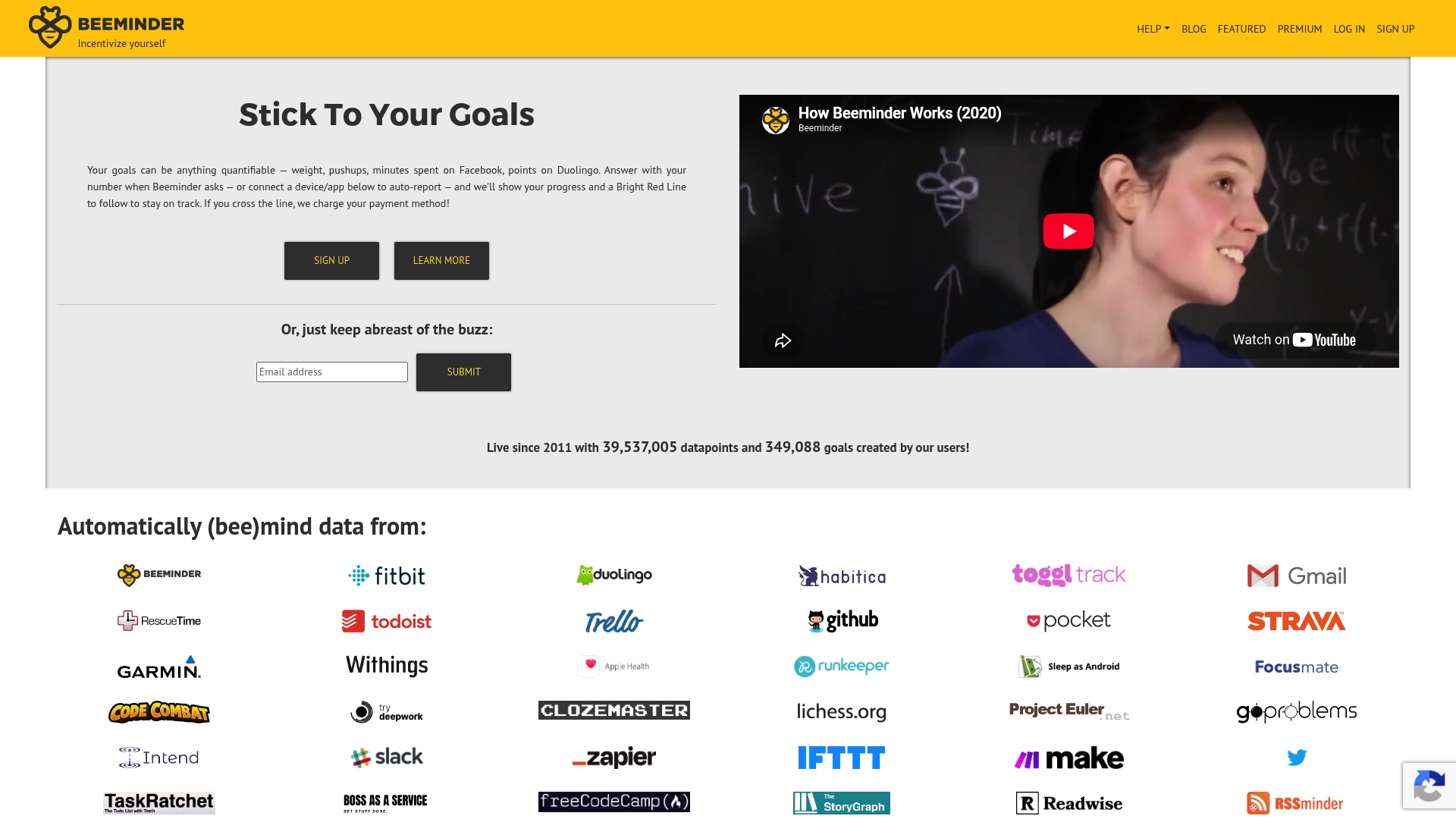
Users pledge money that they will lose if they derail a goal. Beeminder is often listed among the best habit-building app alternatives for people who respond to financial stakes. The app plots progress against a Bright Red Line, so deviation becomes immediately visible.
Core Features
Beeminder tracks measurable goals with visual graphs and lets you connect external services to feed data automatically. It enforces commitment contracts by charging pledged amounts when you miss a target, and it offers a commitment dial and adjustable goal parameters for flexibility. You can import and export data in CSV or JSON and access a streaming API for real time use.
Key Differentiator
The product pairs automated, quantifiable tracking with a financial pledge that creates immediate consequences for slipping targets. That pairing turns ordinary progress charts into a behavioral incentive. Few alternatives match this blend of automatic data reporting and monetary stakes.
Pros
Beeminder combines continuous data capture with a financial commitment model to keep momentum. Automatic reporting from connected apps reduces manual entry and keeps the graphs current. Goal adjustment controls let you widen or tighten targets without losing the commitment structure, and an active community of users provides practical tips and forum support.
Cons
- Steep learning curve for new users who must learn the commitment dial and goal math.
- Requires a financial pledge, which creates real risk and may block some people.
- Derailment can lead to discouragement when penalties are applied.
- The pledge schedule uses a fixed exponential scale that may not match every person’s motivation level.
When It May Not Fit
If you are uncomfortable risking money, this product is the wrong fit. If you prefer purely positive reinforcement without penalties, the commitment contract model will feel harsh. The fixed pledge exponential scale may frustrate people who want a flat or fully custom penalty schedule.
Notable Integrations
- Fitbit
- Duolingo
- Habitica
- Toggl
- Gmail
- RescueTime
- Todoist
- Trello
Who It's For
You should consider Beeminder if you are data driven and willing to use financial stakes to change behavior. It fits people who want automatic tracking from devices and apps and who respond to explicit consequences for missed targets. It suits those comfortable adjusting parameters rather than relying on rigid daily checklists.
Real World Use Case
A user sets a goal to lose 10 pounds in three months and connects a Fitbit and a smart scale. They pledge an amount they are willing to lose if their logged weight crosses the target line. The automatic reporting and the money at stake push consistent tracking and small course corrections over time.
Pricing
The vendor lists pricing as not applicable for this informational summary. Beeminder’s public materials describe commitment contracts and integrations but do not present a single subscription model here. For complete pricing details consult the vendor site.
Website: https://beeminder.com
Forfeit
At a Glance
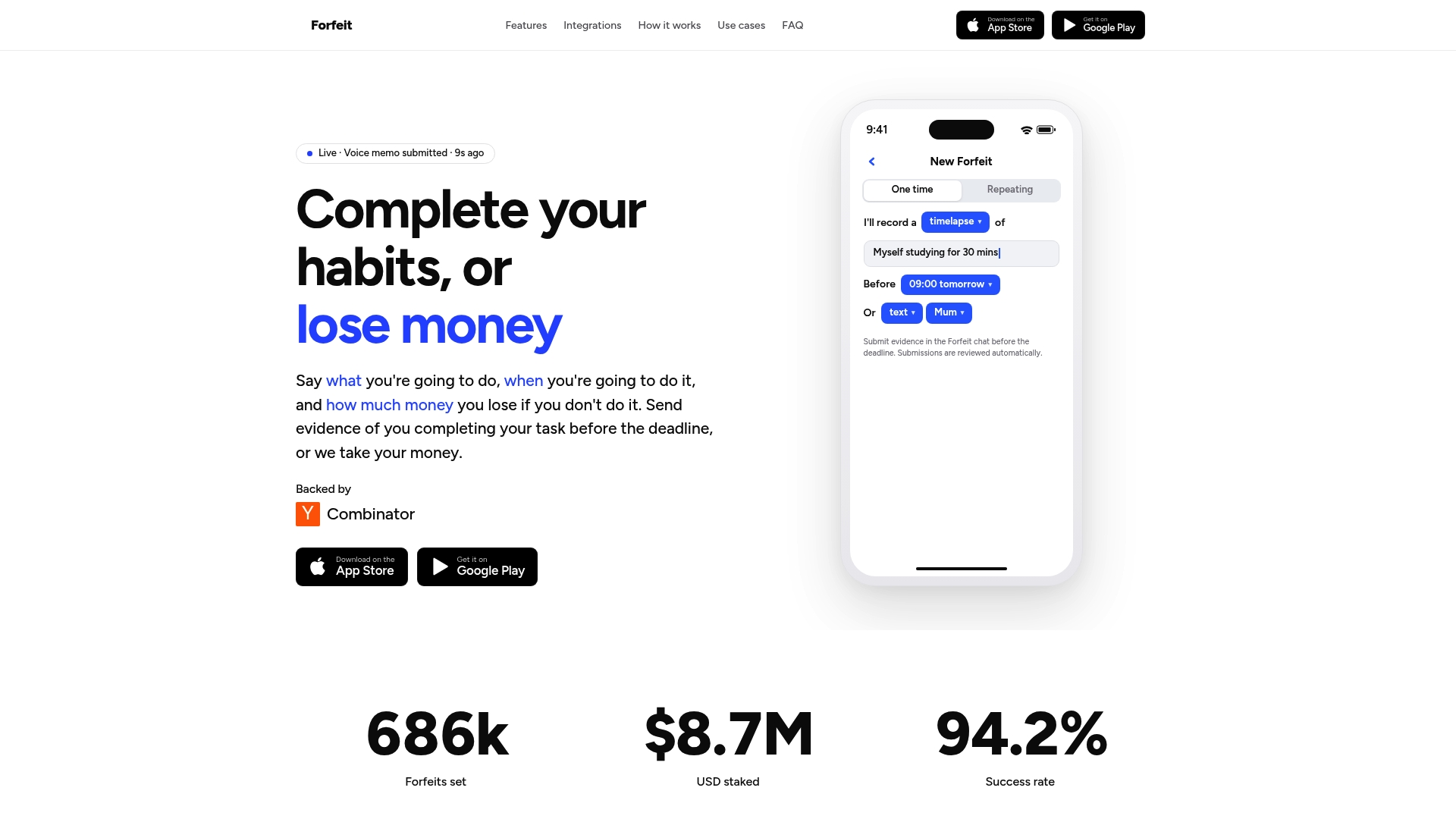
Backed by Y Combinator, Forfeit ties real money stakes to AI and human verification to enforce habit commitments. The app links device data and submitted proof so missed rules trigger automatic escalations. Escalations include calls, texts, app blocking, and other enforcement actions.
Core Features
Users set specific tasks and financial stakes, then submit proof by photo, video, or automatic data feeds. The system offers AI and human verification of evidence, flexible scheduling rules, and automatic enforcement when a rule breaks. Forfeit runs on iOS, Android, Mac, and web and connects to device signals for real time monitoring.
Key Differentiator
Forfeit pairs a financial stake model with layered verification to make accountability tangible. The mix of AI checks and optional human review reduces manual moderation while keeping evidence credible. That combination is the feature that separates stricter accountability from simple reminder apps.
Pros
High customization lets you design rules for simple habits or complex routines while specifying how proof must look. Automated verification cuts the time you spend uploading or judging evidence and keeps momentum moving. Multiple enforcement methods increase the psychological cost of slipping and help people who fail with soft incentives. Native connections to device signals let the app verify activity without constant manual submission. Investor backing adds credibility for people who value an established backer.
Cons
- The app's enforcement methods can feel intense or punitive, which could deter users who prefer gentle reminders.
- It requires broad device permissions, including access to health and usage data, which some people find invasive.
- Verification can become contentious if someone disputes submitted proof and needs human review.
When It May Not Fit
Casual habit builders who want low pressure will likely find the enforcement model too forceful. People unwilling to grant access to health, GPS, or screen time data will face limited functionality. Users who cannot afford recurring stakes or penalties should look for solutions without financial risk.
Notable Integrations
- Apple Health for workout and health metrics.
- GPS location for location based proof.
- Screen Time for device usage tracking.
- Mac activity tracking for desktop behavior verification.
- Third party APIs for bank, fitness, and device data to confirm stakes and actions.
Who It's For
Individuals who need hard accountability and accept financial consequences for missed commitments. People with persistent motivation gaps, productivity problems, or executive function differences will benefit from enforced rules. This suits anyone ready to trade comfort for clear consequences to reach behavior change goals.
Real World Use Case
A runner commits to morning runs and stakes money for each missed day. They submit a shoe photo outside before 7 AM and let device location confirm presence. If the rule fails, the app charges the stake automatically to maintain the agreed incentive structure.
Pricing
Pricing is not publicly listed. The vendor describes pricing as informational only and does not publish clear tier pricing on the site.
Website: https://forfeit.app
WayBetter

At a Glance
Offers incentive driven deposit contracts that ask members to stake money on a challenge and reclaim it by meeting micro goals. The model pairs those contracts with gamified microgoals and a strong social support community to sustain momentum. According to the company, WayBetter draws on decades of behavioral science and works with healthcare providers, including support for GLP-1 medication.
Core Features
WayBetter runs short social challenges built from gamified microgoals, daily check ins, and peer feedback to build habit momentum. Members participate in group threads, post progress updates, and earn rewards while the community applies goal setting and other evidence based techniques. The platform also supports research collaborations and partnerships with providers for evaluative studies.
Key Differentiator
That approach pairs behavior change techniques with game mechanics and peer accountability to encourage stepwise progress. The product relies on repeated small wins rather than broad dieting promises to keep members engaged. This narrower focus makes the community useful for habit formation through social incentives rather than solo tracking.
Pros
Social gaming increases visible accountability, which helps members keep daily commitments and avoid backsliding. The platform emphasizes evidence based techniques like goal setting and social support, and that focus applies to weight, fitness, smoking cessation, and mindset activities. WayBetter also offers opportunities for research collaborations and clinic partnerships, which may interest providers tracking outcomes. Strong community engagement and frequent progress updates make small behavior changes easier to sustain.
Cons
- Limited public detail on specific digital tools or platform integrations.
- May not fit people who prefer private or non gamified approaches.
- Pricing details are not publicly listed, so membership cost is unclear.
When It May Not Fit
If you avoid social accountability or game mechanics, the community style will likely feel intrusive rather than motivating. If you require clinical supervision for a medical condition, this platform is not a replacement for professional care. The model depends on active engagement, so people who rarely log in will probably see little benefit.
Who It's For
Members who enjoy playful competition and regular peer contact will get the most from WayBetter. It suits people aiming for weight management, exercise consistency, smoking cessation, or daily mental health practices. Healthcare providers and researchers seeking a community partner for trials or outcome collection may also find it useful.
Real World Use Case
A person joins a weight loss challenge, stakes a deposit, and completes daily step and nutrition microgoals posted to the group. Peers comment on progress and the participant reclaims the stake after meeting targets, reinforcing sustainable habits. Researchers can run collaborative studies through the community while providers monitor group level outcomes.
Website: https://waybetter.app
Atoms by James Clear
At a Glance
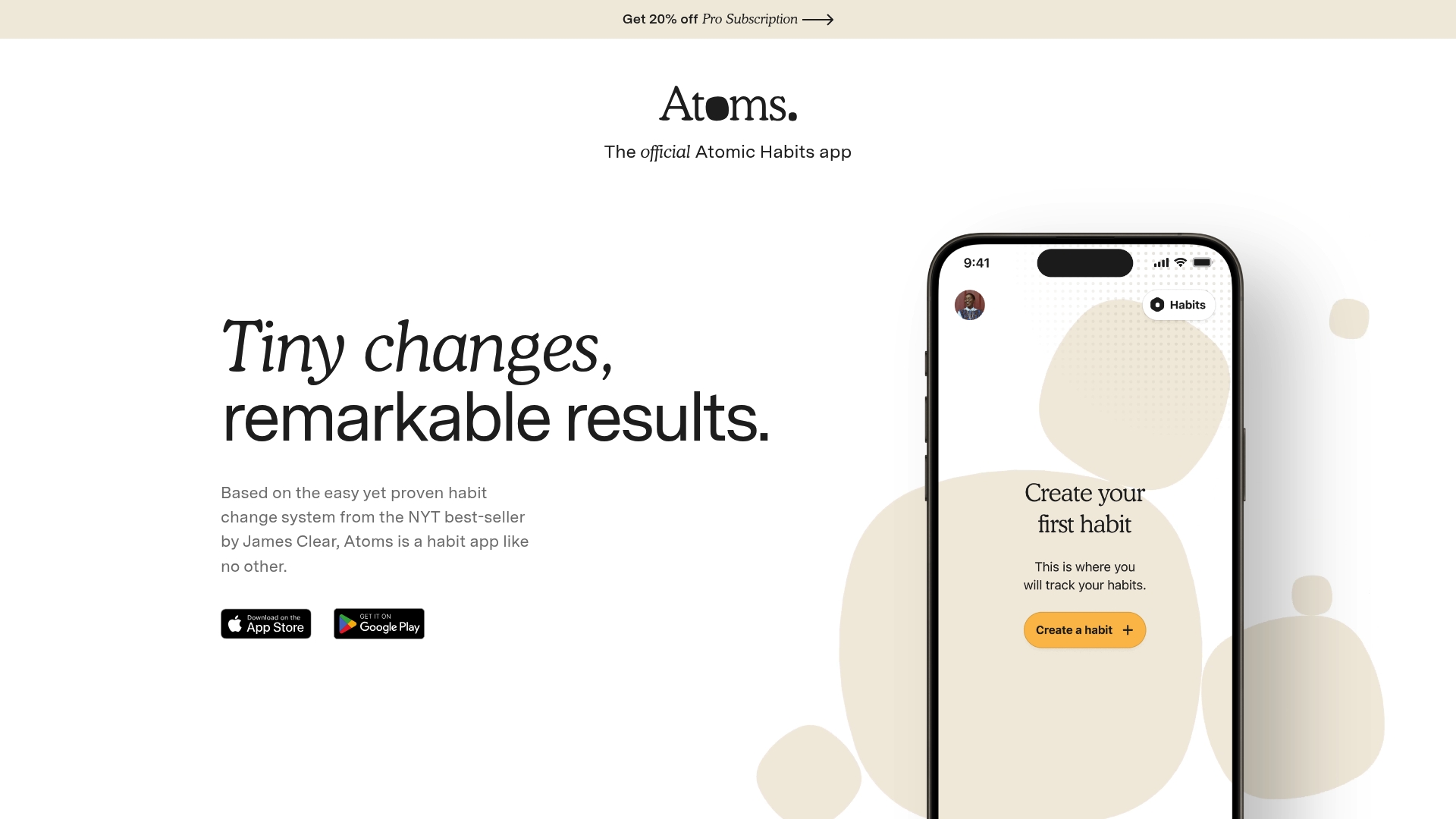
The app pairs daily lessons with identity based habit prompts drawn from James Clear's Atomic Habits. It centers small habit changes and uses progress visualization to make gains feel tangible. The vendor frames the approach as science based and personalized to the individual.
Core Features
Atoms focuses on habit creation and tracking, reminders, and short daily lessons derived from Atomic Habits. The app guides identity based habit formation and shows progress through simple visualization tools. Habit setup and regular nudges keep the emphasis on starting small and adjusting habits as you improve.
Key Differentiator
Atoms ties habit actions directly to identity statements and lesson snippets from James Clear. That linkage between what you do and who you want to become is the app's defining mechanism. The design keeps lessons brief and actionable so you can apply them alongside daily tracking.
Pros
The app keeps attention on one habit at a time, which helps you avoid overload and stay consistent. Daily lessons reinforce small wins and provide a concise mental model for why the habit matters. Progress visualization makes streaks and small improvements visible, which supports continued motivation. The design aligns closely with the book, so readers of Atomic Habits will find familiar language and structure.
Cons
- Reliance on consistent daily engagement for meaningful results. Missing days weakens momentum.
- Limited customization outside core habit features may frustrate users who want advanced scheduling or habit templates.
- Marketing materials mention paid features in some contexts, though the listed price is Free.
Who It's For
People who read Atomic Habits and want an app that mirrors James Clear's method are the best fit. The app suits those who prefer focused, identity driven habit work rather than multi habit dashboards. It matches individuals who value short lessons and visual progress over deep customization.
Real World Use Case
A user sets a single habit to exercise each morning and enables reminders. They read a brief lesson each day and log completion, watching streaks build on the progress screen. Over months the habit becomes routine because the app links small actions to the user’s identity as someone who exercises.
Website: https://atoms.jamesclear.com
Comparison of alternatives
The platforms compared here each excel in distinct habit-building strategies, tailored to specific motivators such as financial stakes, social dynamics, and personalized lessons. Each option presents unique workflows and benefits, catering to varying personal development needs and preferences.
Integration and Workflow Flexibility
Beeminder sets itself apart with its integration capabilities. Users can connect a wealth of external services and devices, enabling tracking of measurable goals without the need for redundant data entry. This automatic syncing, combined with a visual progress chart system, enforces commitment clearly through a financial incentive for missing targets. Flourishorforfeit.com, while offering a similarly financial model, focuses more narrowly on immediate affirmation-based tasks rather than full workflow automation.
Personalized Enforcement Mechanisms
Forfeit emphasizes strict accountability through layered verification checks and real-world data validation. This approach caters to users who demand higher stakes for maintaining behavioral changes, but its rigid enforcement system may not appeal to everyone. Flourishorforfeit.com goes a slightly gentler route by emphasizing self-monitored affirmations with financial stakes, focusing on building habits through more personalized daily engagement rather than external enforcement.
Best fit
- Those motivated by clear financial consequences and consistent affirmation entry will benefit from Flourishorforfeit.com’s refund-based completion structure.
- Habit builders requiring automatic tracking of measurable progress with minimal manual input should consider Beeminder for its vast integration pool and connectivity.
- Users tackling significant accountability gaps who seek strict enforcement should explore Forfeit for its layered verification and action enforcement.
- People drawn to social dynamics and gamified goal setting will find WayBetter’s community-driven structure exciting and engaging.
- Fans of Atomic Habits who value identity-based habit formation can rely on Atoms for its concise lessons and visualization approach.
Our pick
Flourishorforfeit.com shines with its focus on financial accountability paired with self-typed affirmations, offering a unique path for short-term habit formation grounded in economic incentives. While it excels at driving intrinsic commitment over fixed periods, users prioritizing extensive integration or stricter external enforcement may prefer alternatives.
Choosing the right habit-building app can greatly influence your potential for success, and understanding their unique strengths aids in making an informed decision.
| Product | Primary Mechanism | Ideal User | Pricing | Notable Limitation |
|---|---|---|---|---|
| Flourishorforfeit | Stake commitment and affirmation challenges | Financially motivated individuals | $5–$250 per challenge | Limited functionality due to browser support issues |
| Beeminder | Financial stakes with automated data tracking | Data-driven individuals open to financial consequences | Price not published | Steep learning curve for commitment dial and goal math |
| Forfeit | Financial stakes and AI/human verification | Users needing strict accountability | Price not published | Enforcement methods can feel intense |
| WayBetter | Social incentives with gamified microgoals | Socially motivated individuals aiming for small wins | Price not published | Information on tools and integrations is limited |
| Atoms by James Clear | Identity-driven habit formation and lessons | Readers of "Atomic Habits" seeking actionable steps | Free | Requires daily engagement to maintain momentum |
What Makes Sticking to New Habits So Hard for You?
Building lasting habits often feels difficult because reminders lack real consequences. You may want accountability that goes beyond checklists and passive tracking. Flourishorforfeit solves this with a straightforward financial stake you choose from $5 to $250 and a challenge duration of 7, 21, or 30 days. By typing daily affirmations word-for-word, you actively engage and prove your commitment. Successful completion gets your stake fully refunded, which promotes consistent focus on your goals.
Financial accountability changes how you respond to habit-building challenges. If you are someone who benefits from clear, timeboxed financial risk and active participation, you will find Flourishorforfeit matches your needs perfectly. See how Flourishorforfeit turns daily affirmation into habit and begin strengthening your routines with genuine motivation today.
FAQ
What is Flourishorforfeit’s financial commitment model?
Flourishorforfeit requires users to stake between $5 and $250 for a challenge. This model encourages accountability by providing a full refund only upon successful completion of typing daily affirmations, tying financial stakes directly to habit formation.
How does Flourishorforfeit compare to Beeminder?
Beeminder is recognized for its automatic data tracking and commitment contracts that apply penalties for missed goals. Flourishorforfeit, on the other hand, uses a typing task coupled with a refundable stake, appealing to those who prefer a more interactive affirmation practice.
What happens if a user fails to complete Flourishorforfeit’s challenge?
Failing to finish the challenge means the user forfeits their stake, which serves as a strong motivator. The combination of financial loss and the habit formation process aims to drive consistent daily action and accountability.
Does Flourishorforfeit offer a social support system like WayBetter?
Flourishorforfeit lacks the community-driven aspects found in WayBetter, which emphasizes social accountability and peer support. Users seeking interactions or group motivation might prefer WayBetter for its gamified experience, whereas Flourishorforfeit focuses primarily on individual financial stakes.
Can users adjust their stakes in Flourishorforfeit?
The platform offers fixed stake amounts ranging from $5 to $250 and does not allow for adjustment once a challenge begins. This structure ensures that users commit fully to the terms of each specific challenge.